
Introduction (Best AI SEO Tools)
Search engine optimization has changed a lot. It’s not about putting keywords into a page or writing long articles anymore. Today’s SEO is about understanding what people really want when they search, making content that helps them building expertise in a topic watching what competitors do making websites faster and easier to use and keeping information fresh.
The best AI SEO tools in 2026 can help with many of these tasks. They can find keywords improve content for search engines study search results check technical issues on websites suggest internal links create content plans and track how well pages rank.
Ai SEO tools should not be seen as a full replacement, for human decision-making. Each tool has its strengths and weaknesses. The right choice depends on your website, how much you can spend your SEO goals and how experienced you’re.
Important: No AI SEO tool can guarantee higher Google rankings or a specific amount of organic traffic. Search performance depends on many factors, including content quality, search intent, technical SEO, backlinks, competition, user experience, and how accurately a page satisfies the searcher’s needs.
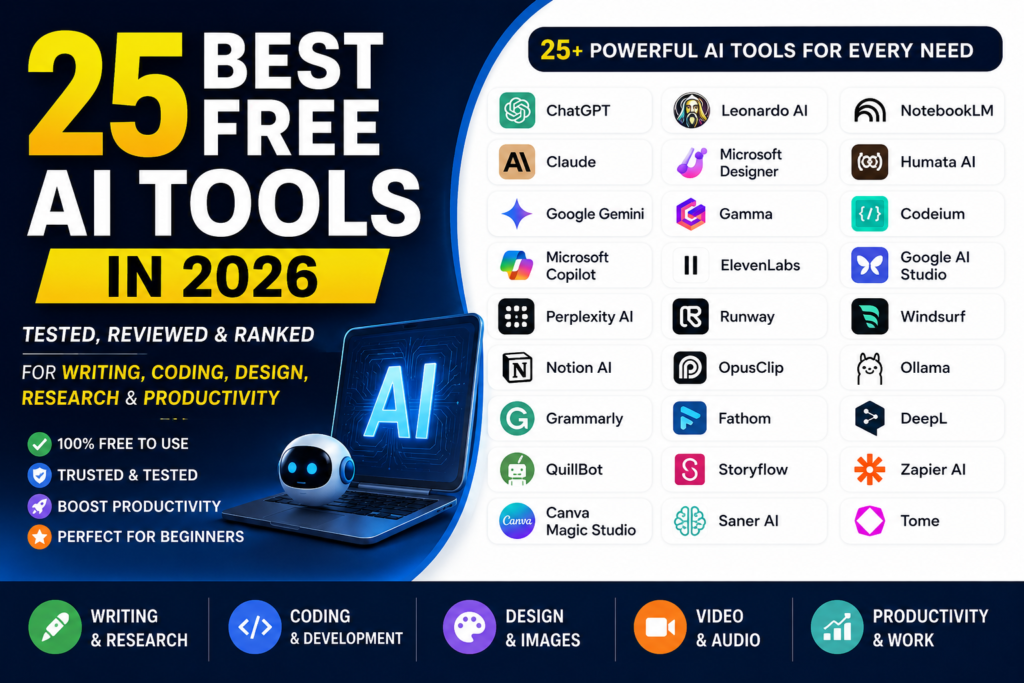
Also Read: 25 Best Free AI Tools in 2026: Top Picks Compared
Table of Contents
What Are AI SEO Tools?
AI SEO tools are software platforms that use intelligence, machine learning and natural language processing to help with search engine optimization tasks. These tools are designed to make SEO work faster and smarter.
Traditional SEO software often depends on databases past performance data, fixed rules and reports that people have to interpret. AI-powered tools go beyond that by understanding language patterns spotting connections, between topics reviewing search results and handling SEO jobs automatically.
For instance an AI content optimization tool doesn’t just count how times a keyword shows up on a competitor’s page. It can look at ideas and entities then suggest improvements to make your article more complete and valuable.
Traditional SEO Tools vs. AI SEO Tools
| Feature / Task | Traditional SEO Tools | AI SEO Tools |
|---|---|---|
| Data Processing | Primarily database-based metrics | Combines SEO data with AI and language analysis |
| Content Recommendations | Keyword counts and predefined rules | Semantic topics, entities, and contextual suggestions |
| Workflow | More manual analysis | More automated workflows |
| Search Intent | Basic intent categories | Deeper analysis of query context |
| Content Briefs | Often require manual research | Can automatically analyze SERP results |
| Internal Linking | Manual or rule-based | AI-assisted contextual suggestions |
AI does not necessarily replace traditional SEO software. In many cases, the most useful workflow combines both.
How AI SEO Tools Work
AI can assist with different parts of the SEO process. The exact capabilities vary between platforms, but common applications include the following.
1. Keyword Research
AI can analyze search queries, related terms, and semantic relationships to help identify keyword opportunities.
Instead of focusing on one exact keyword, marketers can use AI to discover related topics, long-tail queries, and groups of keywords that may belong to the same content topic.
2. Search Intent Analysis
Search intent helps determine what users actually expect when they perform a search.
AI SEO platforms can analyze search results and query patterns to identify whether users are looking for information, comparisons, products, tutorials, or other types of content.
3. Content Optimization
AI content optimization tools can compare your draft with relevant search results and identify topics, terms, entities, questions, and content areas that may need additional coverage.
These recommendations can help writers improve topical completeness without relying entirely on exact-match keyword repetition.
4. Competitor Analysis
Some AI SEO platforms can analyze competitor websites and identify potential content gaps, keyword opportunities, ranking patterns, and other useful SEO information.
This can reduce the amount of manual research required when developing a content strategy.
5. On-Page SEO
AI can assist with common on-page tasks such as creating title ideas, meta descriptions, heading suggestions, internal link recommendations, and image alt-text ideas.
Human review is still important because these recommendations need to make sense for the actual page and its audience.
6. Technical SEO
Advanced SEO platforms can crawl websites and identify technical issues such as broken links, duplicate pages, crawl problems, missing metadata, and other site-health concerns.
Some tools can also assist with structured data and other technical optimizations.
7. Internal Linking
AI can analyze existing website content and suggest pages that could be linked together.
This can be particularly useful for larger websites where manually reviewing every related article becomes time-consuming.
8. Content Briefs and Outlines
AI can analyze search results and extract common headings, questions, and important subtopics to create a starting point for an article brief.
A good content brief can give writers a clear direction before they begin writing.
9. Rank Tracking and Reporting
SEO platforms can monitor keyword positions over time and help identify ranking changes.
Some newer platforms also use AI to interpret ranking data and highlight unusual changes or potential opportunities.
10. SEO Workflow Automation
AI can reduce repetitive work such as generating metadata, organizing keywords, creating content briefs, and reviewing large amounts of website data.
This can be especially valuable for agencies, businesses, and publishers managing many pages.
Key Benefits of AI SEO Tools
Using AI as part of an SEO workflow can provide several advantages.
Faster Research
AI can speed up keyword discovery, SERP analysis, competitor research, and content planning.
Better Content Planning
AI-assisted briefs can help writers identify important topics and questions before writing an article.
More SEO Opportunities
Semantic analysis can uncover related topics and keyword opportunities that may be missed during basic keyword research.
Easier Scaling
Small teams and individual bloggers can use automation to handle more SEO tasks without spending as much time on repetitive work.
Simplified SEO Maintenance
AI-assisted audits and internal linking recommendations can make ongoing website optimization easier.
Limitations of AI SEO Tools
AI SEO tools are useful, but they also have limitations.
AI Can Produce Incorrect Information
AI-generated recommendations and text can contain outdated or inaccurate information. Important facts, statistics, product features, and pricing should always be checked.
AI Does Not Have Genuine First-Hand Experience
AI cannot replace actual product testing, personal experience, expert knowledge, or original observations.
Content Can Become Generic
If every website uses the same AI-generated outlines and recommendations without adding anything original, articles can start to look very similar.
The best approach is to use AI for research and efficiency while adding your own judgment, examples, explanations, and useful information.
What to Look For in an AI SEO Tool
Before paying for an AI SEO platform, consider the features that are most important for your particular workflow.
- Keyword Research: Check search volume, keyword difficulty, related terms, and keyword clustering.
- Search Intent: Look for tools that provide more than simple informational or transactional labels.
- Content Optimization: Check whether the platform provides useful topic and semantic recommendations.
- Competitor Analysis: Look for competitor keyword, content, and backlink information.
- Technical SEO: Check for website crawling and technical audit capabilities.
- Rank Tracking: Reliable keyword monitoring is important for measuring SEO progress.
- Integrations: WordPress, Google Search Console, Google Analytics, and other integrations can simplify your workflow.
- Ease of Use: A complicated platform may not be useful if you cannot efficiently work with it.
- Free Trial or Free Plan: A trial can help you determine whether the tool fits your needs.
- Pricing and Value: Compare the available features and usage limits with your actual requirements.
Pricing note: SEO software prices, plans, credits, features, and free-trial policies can change. Always check the official website before purchasing.
Quick Comparison: 15 Best AI SEO Tools in 2026
| Tool | Best For | Free Option | Starting Paid Price* | Main Strength | Rating |
|---|---|---|---|---|---|
| Semrush | All-in-one SEO | Limited free access / trial | Around $129–$139/month | Competitive intelligence and keyword research | 4.8/5 |
| Ahrefs | Backlinks and SEO research | Webmaster Tools | Around $99–$129/month | Backlink analysis and SEO data | 4.8/5 |
| Surfer SEO | Content optimization | Limited options | Around $89–$99/month | SERP-based content optimization | 4.6/5 |
| SE Ranking | All-in-one SEO | 14-day trial | Around $55–$103/month | Rank tracking and site audits | 4.6/5 |
| Frase | Content briefs | Trial options | Around $39–$49/month | SERP research and content briefs | 4.5/5 |
| Scalenut | AI content workflows | Free trial | Around $39–$59/month | Guided content creation | 4.4/5 |
| Alli AI | SEO automation | Trial | Around $249–$299/month | Automated technical SEO | 4.3/5 |
| Rank Math | WordPress SEO | Free version | Around $59–$69/year | WordPress SEO and Schema | 4.7/5 |
| AIOSEO | WordPress optimization | Lite version | Around $49.60/year | On-page SEO and internal linking | 4.5/5 |
| Clearscope | Content optimization | No permanent free plan | Around $170–$189/month | NLP content analysis | 4.5/5 |
| MarketMuse | Topical authority | Limited free plan | Around $99–$149/month | Topic and content strategy | 4.4/5 |
| Outranking | SEO content workflows | Trial | Around $79–$99/month | Guided content optimization | 4.3/5 |
| NeuronWriter | Budget content optimization | Trial | Around $19–$23/month | Semantic content optimization | 4.6/5 |
| WriterZen | Keyword clustering | 7-day trial | Around $27–$39/month | Keyword discovery and clustering | 4.4/5 |
| Keyword Insights | Keyword clustering | Trial / credits | Around $58/month | Search-intent classification | 4.5/5 |
*Prices are approximate and may change. Check the provider’s official pricing page before subscribing.
Detailed Reviews: 15 Best AI SEO Tools
1. Semrush
Overview
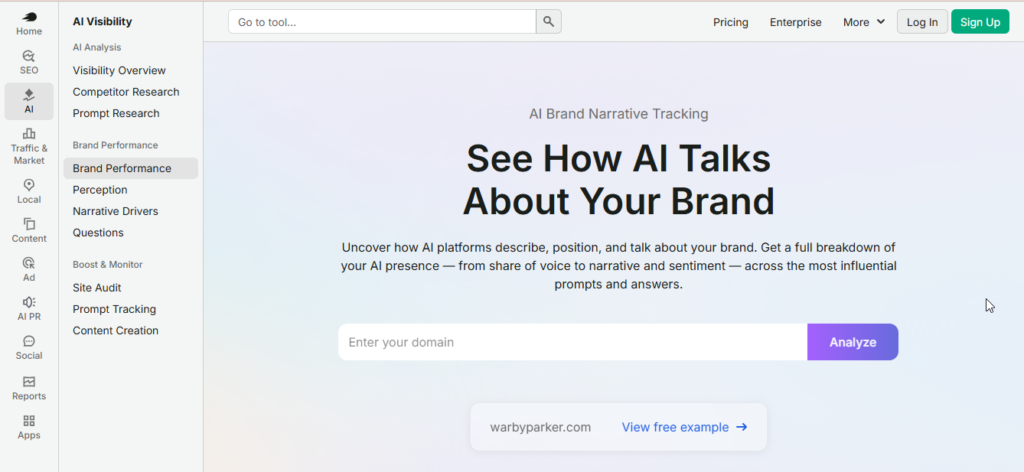
Semrush is one of the most comprehensive SEO platforms available. It combines keyword research, competitor analysis, backlink research, site auditing, rank tracking, content tools, and other marketing features in one platform.
Its AI-powered capabilities can assist with content optimization, search intent analysis, and visibility monitoring.
Key Features
- Extensive keyword and domain databases
- Competitor keyword analysis
- Keyword gap research
- Site Audit
- Rank tracking
- Content optimization tools
- SEO Writing Assistant
- AI-related search visibility features
AI Capabilities
Semrush uses AI across several parts of its platform to assist with content recommendations, search intent analysis, keyword research, and visibility analysis.
SEO Use Cases
- Finding competitor keyword opportunities
- Identifying content gaps
- Monitoring rankings
- Auditing technical SEO issues
- Optimizing articles before publication
Ease of Use
The interface is well organized, but the large number of features can be overwhelming for complete beginners.
Free Option & Pricing
A limited free account and trial options may be available depending on the current plan. Paid plans generally start in the higher monthly price range.
Always verify current pricing directly with Semrush.
Pros
- Comprehensive SEO feature set
- Strong competitor research
- Powerful keyword data
- Technical SEO auditing
- Rank tracking
Cons
- Expensive compared with simpler SEO tools
- Additional features and limits can increase costs
- Beginners may need time to learn the platform
Best For
SEO professionals, agencies, businesses, and serious website owners who need an all-in-one SEO platform.
Our Rating
4.8/5
Also Read: 15 Best AI Marketing Tools in 2026: Tested & Compared
2. Ahrefs
Overview
Ahrefs is particularly well known for backlink research and SEO analysis. Its platform includes tools for keyword research, competitor analysis, website auditing, content research, and rank tracking.
Key Features
- Backlink analysis
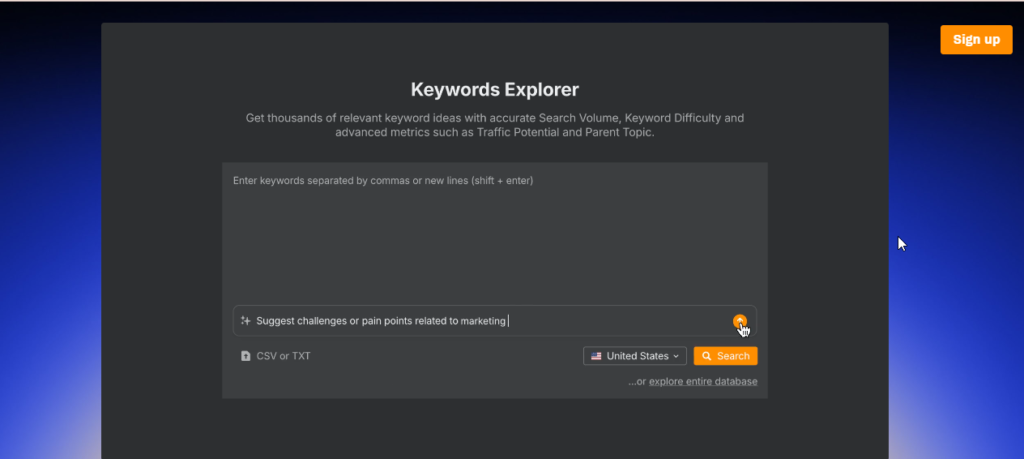
- Keywords Explorer
- Site Explorer
- Site Audit
- Competitor research
- Content research
- Rank tracking
AI Capabilities
Ahrefs uses machine learning and other technologies to improve areas such as keyword grouping, search analysis, and visibility research.
SEO Use Cases
- Finding backlink opportunities
- Researching competitor websites
- Discovering keyword opportunities
- Monitoring website health
- Identifying content gaps
Ease of Use
Ahrefs provides a relatively clean interface with detailed reports and filtering options.
Free Option & Pricing
Ahrefs Webmaster Tools provides limited free access for eligible website owners. Paid plans vary according to features and usage.
Pros
- Strong backlink database
- Excellent competitor research
- Powerful keyword research
- Useful website auditing tools
Cons
- Usage limits can become restrictive
- More expensive for heavy users
- Content optimization is not its primary strength
Best For
SEO professionals, link builders, website owners, and marketers focused heavily on backlinks and competitive research.
Our Rating
4.8/5
3. Surfer SEO
Overview
Surfer SEO focuses heavily on content optimization. It analyzes search results and provides recommendations designed to help writers improve topical coverage and on-page relevance.
Key Features
- Content Editor
- SERP Analyzer
- Content optimization
- Topic and entity recommendations
- Content brief creation
- WordPress integration
AI Capabilities
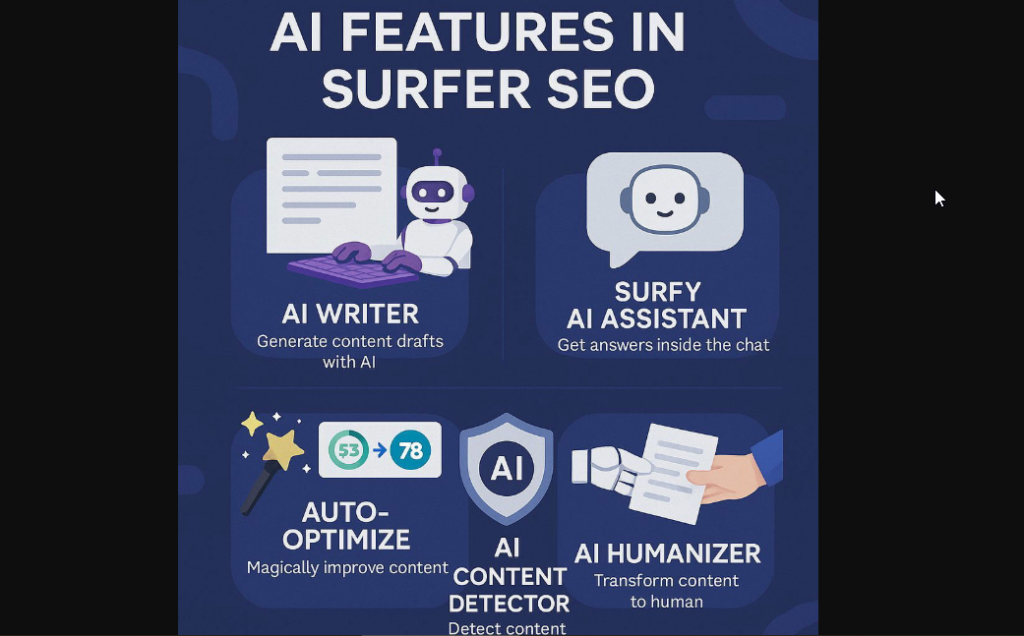
Surfer uses AI and machine learning to analyze search results and provide recommendations for content structure, topics, and optimization.
Its AI writing capabilities can also assist with generating article drafts.
SEO Use Cases
- Optimizing existing articles
- Creating content briefs
- Finding missing topics
- Improving on-page SEO
- Comparing content with search competitors
Ease of Use
The content editor is relatively easy to understand, making it suitable for writers and bloggers.
Free Option & Pricing
Surfer’s plans and available trials can change, so check its current pricing before subscribing.
Pros
- Strong content optimization
- Easy-to-understand recommendations
- Useful SERP analysis
- Helpful for content teams
Cons
- Can become expensive for high-volume usage
- Optimization scores should not be followed blindly
- Primarily focused on content rather than technical SEO
Best For
Bloggers, writers, content teams, and publishers focused on improving on-page content.
Our Rating
4.6/5
4. SE Ranking
Overview
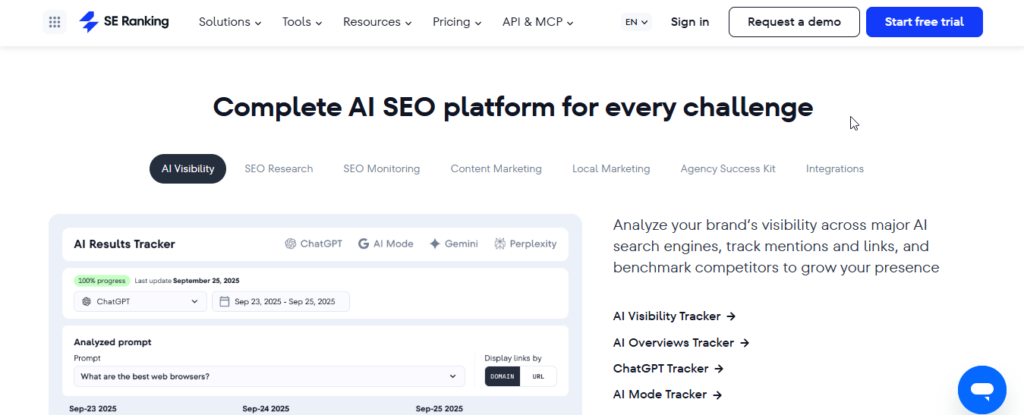
SE Ranking combines keyword research, rank tracking, site auditing, competitor research, backlink monitoring, and content optimization.
It can be an attractive option for users who want several SEO features without paying enterprise-level prices.
Key Features
- Keyword rank tracking
- Keyword research
- Site Audit
- On-Page SEO Checker
- Competitor research
- Backlink monitoring
- Content tools
AI Capabilities
AI-assisted features can help with keyword grouping, content recommendations, and analysis of ranking changes.
SEO Use Cases
- Tracking daily keyword positions
- Auditing technical SEO
- Researching competitors
- Optimizing content
- Monitoring backlinks
Ease of Use
The interface is relatively straightforward and accessible to newer SEO users.
Free Option & Pricing
A free trial is generally available, while paid plans vary based on tracking frequency and usage.
Pros
- Good overall feature set
- Strong rank tracking
- Useful site audit
- Competitive pricing
Cons
- Some databases may not be as extensive as the largest platforms
- Advanced features may require higher plans
Best For
Small businesses, freelancers, bloggers, and growing agencies.
Our Rating
4.6/5
5. Frase
Overview
Frase is designed around content research, SEO briefs, and content optimization. It can analyze search results and help writers identify important headings, questions, and topics.
Key Features
- SERP research
- Content briefs
- AI writing assistance
- Content optimization
- Question research
- Content editing
AI Capabilities
Frase uses AI to analyze search results, extract questions and topics, and assist with content creation.
SEO Use Cases
- Building article briefs
- Finding questions to answer
- Researching competing content
- Optimizing existing articles
Ease of Use
The platform has a relatively focused workflow, making it easier to understand than some large all-in-one SEO suites.
Free Option & Pricing
Trial options and pricing can change over time.
Pros
- Fast content research
- Useful content briefs
- Simple workflow
- Helpful question discovery
Cons
- Limited technical SEO capabilities
- Not designed primarily for backlink research
- AI-generated text still requires editing
Best For
Bloggers, content strategists, writers, and publishers.
Our Rating
4.5/5
6. Scalenut

Scalenut is an AI-powered content marketing platform designed to take users through research, planning, writing, and optimization.
Its guided workflow can help users create long-form content while keeping SEO recommendations within the writing process.
Key Features
- Guided content creation
- AI writing assistance
- Content optimization
- Keyword research
- Topic clustering
- SEO content editor
AI Capabilities
AI assists with research, outlines, titles, and content generation while using SEO-related information to guide the workflow.
Best For
Bloggers and content creators who want a guided approach to creating SEO-focused articles.
Pros
- Easy step-by-step workflow
- Content and SEO features in one place
- Keyword clustering capabilities
Cons
- AI-generated content needs fact checking
- Less focused on advanced technical SEO
Our Rating
4.4/5
7. Alli AI
Overview
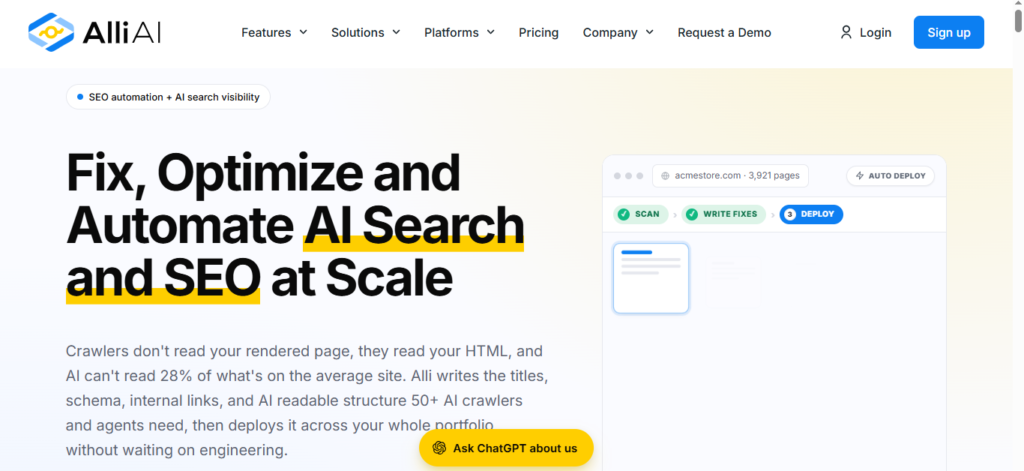
Alli AI focuses heavily on SEO automation, particularly for larger websites and agencies.
The platform is designed to help users make large-scale on-page and technical SEO changes without manually editing every page.
Key Features
- Automated on-page optimization
- Bulk metadata updates
- Schema automation
- Technical SEO recommendations
- Site-wide optimization
AI Capabilities
AI analyzes website pages and identifies optimization opportunities that can be applied at scale.
SEO Use Cases
- Updating metadata across large websites
- Automating SEO changes
- Managing large websites
- Scaling technical SEO workflows
Pros
- Strong automation
- Useful for large websites
- Reduces manual technical work
Cons
- Expensive for small websites
- Automated changes should be reviewed carefully
- Better suited to advanced users
Best For
SEO agencies, enterprise websites, and large e-commerce sites.
Our Rating
4.3/5
8. Rank Math
Overview
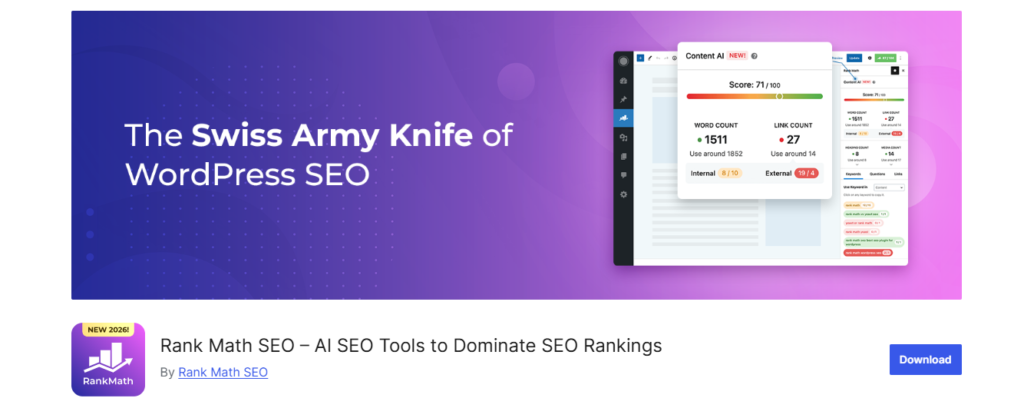
Rank Math is a popular WordPress SEO plugin that brings many SEO functions directly into the WordPress dashboard.
It provides tools for on-page optimization, Schema markup, redirects, analytics, and AI-assisted content optimization.
Key Features
- On-page SEO analysis
- Schema Generator
- Redirect management
- Google Search Console integration
- Content AI
- WordPress integration
AI Capabilities
Content AI can provide suggestions for keywords, content structure, word count, headings, and related terms.
SEO Use Cases
- Optimizing WordPress posts
- Managing metadata
- Creating Schema markup
- Managing redirects
- Improving on-page SEO
Pros
- Strong free version
- Excellent WordPress integration
- Many features in one plugin
- Useful Schema tools
Cons
- Designed specifically for WordPress
- Some AI features use credits
Best For
WordPress bloggers, publishers, and small business websites.
Our Rating
4.7/5
9. AIOSEO
Overview
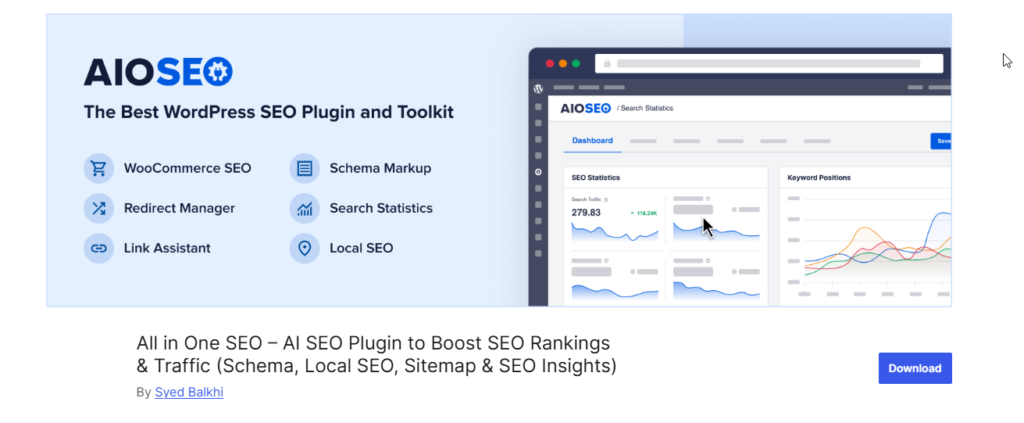
AIOSEO, or All in One SEO, is another established WordPress SEO plugin. It provides tools for on-page SEO, Schema, XML sitemaps, internal linking, and other website optimization tasks.
Key Features
- TruSEO analysis
- Internal Link Assistant
- Schema support
- XML sitemap tools
- SEO metadata management
AI Capabilities
AI-assisted features can help generate titles and descriptions and provide content-related recommendations.
SEO Use Cases
- Improving WordPress on-page SEO
- Managing metadata
- Finding internal linking opportunities
- Configuring Schema
- Managing site-wide SEO settings
Pros
- Easy setup
- Useful internal linking features
- Good option for WordPress users
- Free version available
Cons
- Advanced features require paid plans
- WordPress-only
Best For
WordPress website owners who want a straightforward SEO plugin.
Our Rating
4.5/5
10. Clearscope
Overview
Clearscope is a premium content optimization platform aimed primarily at professional content teams, publishers, and businesses.
Its main focus is helping writers understand which topics and terms are relevant to a particular search.
Key Features
- Content optimization editor
- Topic recommendations
- Content grading
- Content inventory
- Google Docs integration
- WordPress integration
AI Capabilities
Natural language processing helps identify relevant terms and topics from search results.
Pros
- High-quality content recommendations
- Clean interface
- Strong content optimization
- Useful for professional content teams
Cons
- High price
- No major technical SEO or backlink focus
- Less suitable for small hobby websites
Best For
Enterprise publishers, agencies, and professional content teams.
Our Rating
4.5/5
11. MarketMuse
Overview
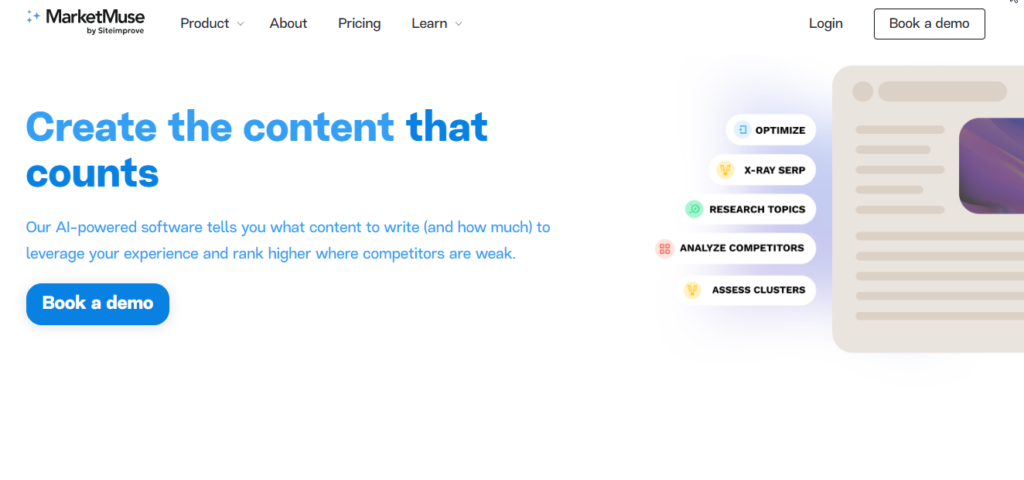
MarketMuse takes a broader approach to SEO by focusing on topical authority and content strategy.
Instead of looking at individual keywords alone, it can help website owners understand content gaps across an entire topic.
Key Features
- Topic modeling
- Content inventory analysis
- Content gap research
- Competitive analysis
- Topic planning
AI Capabilities
AI and machine learning are used to identify relationships between topics and evaluate content coverage.
Best For
Content strategists and website owners building long-term topical authority.
Pros
- Strong topic analysis
- Useful content strategy features
- Good for larger content libraries
Cons
- Can be complex for beginners
- Full functionality can be expensive
Our Rating
4.4/5
12. Outranking
Overview
Outranking is designed to guide users through SEO research, content planning, writing, and optimization.
Its workflow focuses on creating structured content based on search intent and SERP research.
Key Features
- Content briefs
- SERP analysis
- Semantic optimization
- AI writing
- Content workflows
AI Capabilities
AI can analyze search results and help create outlines, summaries, and content recommendations.
Pros
- Structured content workflow
- Useful SERP analysis
- Strong content planning
Cons
- Learning curve
- More expensive for users with low content volume
Best For
SEO writers, agencies, and content teams.
Our Rating
4.3/5
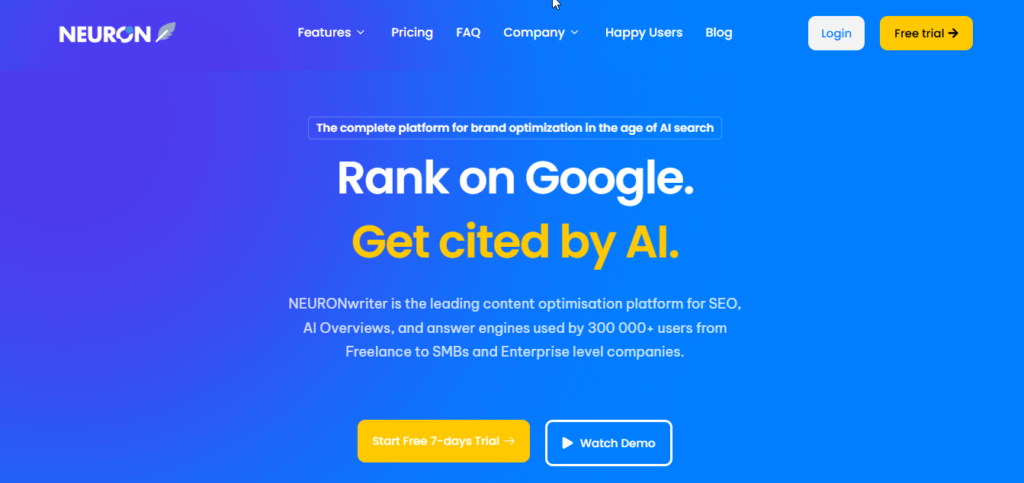
13. NeuronWriter
Overview
NeuronWriter is a budget-friendly content optimization platform that focuses on semantic SEO and SERP analysis.
It can help writers understand what topics and terms are commonly associated with competing pages.
Key Features
- Semantic content editor
- SERP analysis
- Content scoring
- Competitor analysis
- AI writing assistance
- Content planning
AI Capabilities
The platform uses NLP and AI-assisted analysis to provide recommendations based on competing search results.
Pros
- Affordable
- Useful semantic SEO features
- Easy-to-understand editor
- Good option for smaller websites
Cons
- Less extensive backlink data
- Lower plans have usage limits
Best For
Bloggers, freelancers, small businesses, and niche websites.
Our Rating
4.6/5
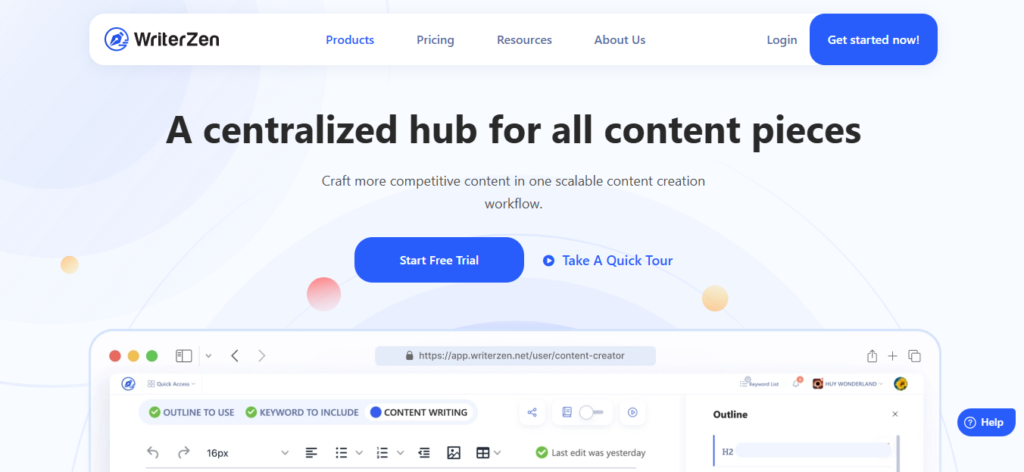
14. WriterZen
Overview
WriterZen focuses on keyword research, topic discovery, keyword clustering, and content planning.
It can help turn large keyword lists into organized content groups.
Key Features
- Topic Discovery
- Keyword clustering
- Keyword research
- Content creation tools
- Plagiarism checking
AI Capabilities
AI can organize keywords into related groups based on search-result relationships.
Pros
- Useful keyword clustering
- Visual research tools
- Helpful for content planning
Cons
- Limited technical SEO features
- AI writing credits can be consumed quickly
Best For
Bloggers, content creators, and niche website owners.
Our Rating
4.4/5
Also Read: Best AI Writing Tools 2026: 15 Best AI Writers Compared (Free & Paid)
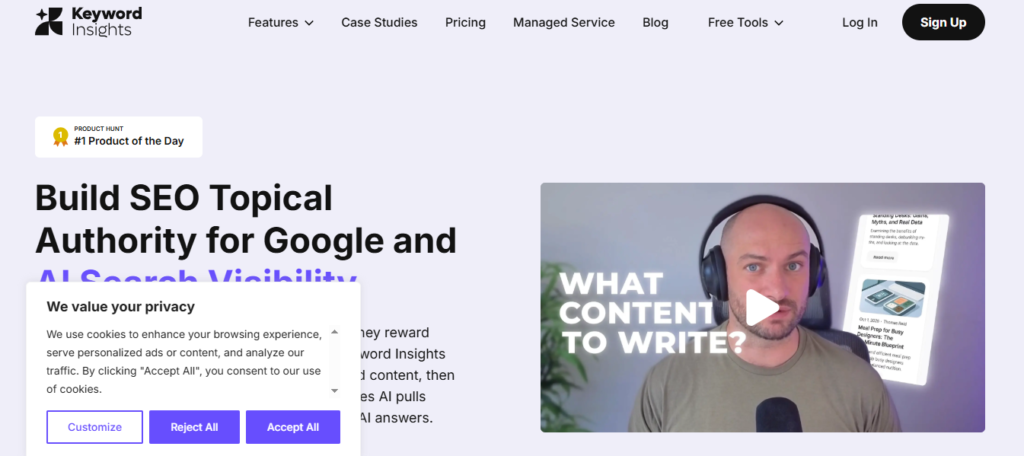
15. Keyword Insights
Overview
Keyword Insights focuses primarily on keyword clustering and search-intent analysis.
It can process large keyword lists and determine which terms may be targeted by the same page.
Key Features
- Keyword clustering
- Search intent classification
- SERP analysis
- AI content briefs
- Keyword grouping
AI Capabilities
The platform analyzes SERP results to determine relationships between keywords and group them into potential content targets.
SEO Use Cases
- Organizing large keyword lists
- Preventing keyword cannibalization
- Creating content briefs
- Planning content clusters
Pros
- Strong keyword clustering
- Useful intent classification
- Efficient for large keyword sets
Cons
- More specialized than all-in-one SEO platforms
- May require separate tools for some SEO tasks
Best For
SEO strategists, agencies, and marketers managing large keyword datasets.
Our Rating
4.5/5
Comprehensive Comparison of the 15 AI SEO Tools
| Tool | Best Feature | Best For | Keyword Research | Content Optimization | Technical SEO | Free Option |
|---|---|---|---|---|---|---|
| Semrush | Competitive intelligence | Agencies & businesses | Excellent | Good | Excellent | Limited |
| Ahrefs | Backlink analysis | SEO professionals | Excellent | Basic | Excellent | Webmaster Tools |
| Surfer SEO | SERP content optimization | Bloggers & writers | Basic | Excellent | Limited | Limited |
| SE Ranking | Rank tracking | Small businesses | Strong | Good | Strong | Trial |
| Frase | Content briefs | Content strategists | Basic | Strong | Limited | Trial |
| Scalenut | Guided content creation | Bloggers | Good | Strong | Limited | Trial |
| Alli AI | SEO automation | Agencies & large sites | Limited | Good | Excellent | Trial |
| Rank Math | WordPress SEO | WordPress users | Basic | Good | Excellent | Free version |
| AIOSEO | Internal linking | WordPress publishers | Basic | Good | Strong | Lite version |
| Clearscope | NLP optimization | Enterprise content teams | Basic | Excellent | Limited | No permanent free plan |
| MarketMuse | Topic authority | Content strategists | Strong | Excellent | Basic | Limited |
| Outranking | Guided workflows | SEO writers | Basic | Strong | Limited | Trial |
| NeuronWriter | Budget optimization | Bloggers | Basic | Strong | Limited | Trial |
| WriterZen | Keyword clustering | Niche creators | Excellent | Good | Limited | Trial |
| Keyword Insights | Intent clustering | SEO strategists | Excellent | Good | Limited | Trial |
How to Choose the Right AI SEO Tool
There is no single platform that is perfect for every website. Your choice should depend on what you actually need.
Best AI SEO Tool for Beginners: SE Ranking or Rank Math
SE Ranking is a good option for beginners who want multiple SEO functions in one dashboard.
For WordPress users, Rank Math can be especially convenient because its SEO tools work directly inside the WordPress editor.
Best AI SEO Tool for Keyword Research: Semrush or Ahrefs
Semrush and Ahrefs are strong choices for keyword research, competitor analysis, and SEO data.
Choose between them based on the specific metrics, workflows, and pricing that fit your website.
Best AI SEO Tool for Content Optimization: Surfer SEO or Clearscope
If your main goal is improving articles, Surfer SEO and Clearscope are worth considering.
Surfer is particularly useful for bloggers and content teams, while Clearscope is positioned more toward professional and enterprise content workflows.
Best AI SEO Tool for Technical SEO: Alli AI
Alli AI focuses heavily on technical and on-page SEO automation.
It is better suited to agencies and larger websites than to small personal blogs.
Best AI SEO Tool for Bloggers: NeuronWriter or Scalenut
For bloggers working with a limited budget, NeuronWriter can provide useful semantic SEO recommendations without the price of some enterprise platforms.
Scalenut is another option for users who prefer a guided content creation workflow.
Best AI SEO Tool for Small Businesses: SE Ranking
SE Ranking provides a combination of rank tracking, website auditing, keyword research, and content-related tools that can work well for smaller businesses.
Best AI SEO Tool for Agencies: Semrush
Semrush offers a broad collection of research, reporting, competitor analysis, auditing, and SEO management tools that can support multi-client workflows.
Best Budget-Friendly AI SEO Option: NeuronWriter
For users primarily interested in content optimization and semantic recommendations, NeuronWriter can be an affordable starting point.
How to Use AI for SEO Without Hurting Content Quality
AI can make SEO faster, but using it incorrectly can make your content generic or unreliable.
Here are some practical guidelines.
1. Start With Search Intent
Understand what the searcher actually wants before creating an outline or using an AI writing tool.
2. Use AI for Research and Ideas
AI can help organize research, generate ideas, and identify topics, but the final article should reflect human judgment.
3. Fact-Check Important Information
Always verify statistics, dates, prices, product features, and other information before publishing.
4. Add Human Value
Include original explanations, screenshots, personal observations, practical examples, or other useful information whenever possible.
5. Avoid Keyword Stuffing
Do not insert keywords simply because an optimization tool recommends them. Natural writing and useful information should come first.
6. Avoid Mass-Producing Low-Value Pages
Creating large numbers of nearly identical AI-generated pages without meaningful value is not a sustainable SEO strategy.
7. Edit AI-Generated Drafts
AI-generated text should be reviewed for accuracy, repetition, clarity, tone, and usefulness before publication.
8. Keep Information Updated
SEO tools, pricing, software features, and search practices can change. Review important information regularly.
9. Focus on the Reader
Do not write simply to reach a particular word count or content score.
The goal should be to answer the user’s question better than competing pages.
10. Perform a Final Human Review
Before publishing, check the article yourself for accuracy, clarity, formatting, links, and usefulness.
AI SEO Tools vs. Traditional SEO Tools
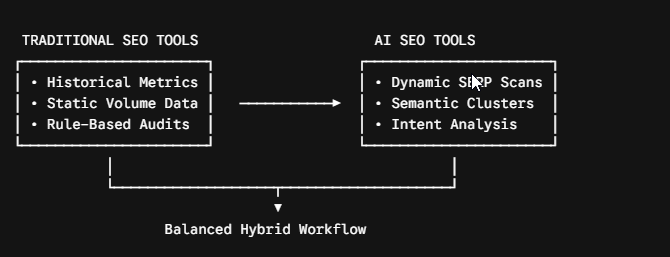
AI SEO tools and traditional SEO platforms are not necessarily competitors.
Where AI Tools Are Strong
AI is particularly useful for:
- Processing large amounts of information
- Creating content briefs
- Grouping keywords
- Analyzing search intent
- Generating optimization suggestions
- Automating repetitive tasks
Where Traditional SEO Tools Remain Important
Traditional SEO platforms are still valuable for:
- Backlink databases
- Historical keyword information
- Technical website crawling
- Rank tracking
- Domain analysis
- Search performance data
Where Human Judgment Is Still Needed
Humans remain important for:
- Strategic decisions
- Original ideas
- First-hand experience
- Brand positioning
- Fact checking
- Understanding customers
- Deciding what information is genuinely useful
The strongest workflow combines SEO data + AI assistance + human judgment.
Common Mistakes When Using AI SEO Tools
Avoid these mistakes when incorporating AI into your SEO strategy.
Blindly Trusting AI Recommendations
Not every suggested keyword or topic needs to be added to your article.
Publishing Unedited AI Content
Raw AI content can contain repetitive language, inaccurate facts, and generic explanations.
Keyword Stuffing
Trying to maximize an SEO score by forcing keywords into every paragraph can make an article difficult to read.
Chasing Search Volume Without Understanding Intent
A high-volume keyword is not automatically a good target. Your page still needs to satisfy the searcher’s actual goal.
Ignoring Technical SEO
Content optimization cannot fix every technical problem. Website speed, indexing, canonicalization, mobile usability, and site architecture still matter.
Using Inaccurate Facts
Incorrect statistics or product information can damage reader trust.
Choosing Tools Only Because They Are Popular
A popular platform is not necessarily the best option for your website.
Consider your budget, platform, team size, publishing volume, and actual SEO requirements.
Paying for Features You Do Not Need
If you only need basic WordPress SEO, there may be little reason to pay for an expensive enterprise SEO suite.
Frequently Asked Questions
What is the best AI SEO tool in 2026?
There is no single best tool for everyone.
Semrush and Ahrefs are strong choices for SEO research and competitive analysis, while Surfer SEO and NeuronWriter are more focused on content optimization.
Which AI SEO tool is best for keyword research?
Semrush and Ahrefs are strong options for comprehensive keyword research and competitor analysis.
The right choice depends on the specific data and features you need.
What is the best free AI SEO tool?
For WordPress users, Rank Math offers a useful free version.
Website owners can also use Ahrefs Webmaster Tools for certain site audit and backlink-related tasks on websites they own.
Can AI SEO tools guarantee Google rankings?
No.
No SEO tool can guarantee a specific Google ranking.
Search performance depends on many factors, including content quality, search intent, competition, technical SEO, backlinks, website reputation, and user experience.
Can AI replace an SEO expert?
AI can automate many SEO tasks, but it does not completely replace an experienced SEO professional.
Strategy, interpretation, original ideas, content quality, and business decisions still require human judgment.
Are AI-generated articles good for SEO?
AI-generated content can be useful when it is properly researched, fact-checked, edited, and improved with meaningful human input.
Simply publishing large amounts of unedited AI-generated content is not a good content strategy.
Which AI SEO tool is best for bloggers?
NeuronWriter is worth considering for bloggers who want affordable semantic content optimization.
Scalenut can be useful for bloggers who prefer a guided content creation workflow.
Are AI SEO tools worth paying for?
They can be, especially for businesses, agencies, publishers, and people who regularly perform keyword research or publish content.
The main benefit is often the amount of time saved on research, analysis, optimization, and repetitive tasks.
Can I use ChatGPT for SEO?
Yes.
ChatGPT can help with tasks such as:
- Brainstorming keyword ideas
- Creating article outlines
- Generating title ideas
- Improving content structure
- Creating meta description drafts
- Rewriting content
- Finding potential FAQ questions
However, specialized SEO platforms generally provide SEO-specific data that a general AI chatbot does not provide on its own.
You can also read our ChatGPT Review 2026 for a more detailed look at its capabilities.
What should I check before buying an AI SEO tool?
Consider:
- Main SEO features
- Keyword research capabilities
- Content optimization
- Technical SEO
- Integrations
- Usage limits
- Free trial
- Pricing
- Your monthly publishing volume
- Whether the platform fits your website
Quick Picks
| Need | Recommended Tool |
|---|---|
| Best Overall | Semrush |
| Best for Keyword Research | Ahrefs or Semrush |
| Best for Content Optimization | Surfer SEO |
| Best for Technical SEO Automation | Alli AI |
| Best for Beginners | SE Ranking |
| Best for Bloggers | NeuronWriter |
| Best Budget Option | NeuronWriter |
| Best for WordPress | Rank Math |
| Best for Agencies | Semrush |
| Best for Topic Strategy | MarketMuse |
Conclusion
AI has changed the way many SEO tasks are done. Now keyword research, search intent analysis, content planning, competitor research, technical audits and optimization can be completed thanks to AI software.
However the technology, by itself does not ensure SEO success.
The best way is to let AI handle the research and analysis while humans take charge for strategy fact checking originality and the final editorial decisions.
Before picking an AI SEO tool think about your budget, website platform, SEO goals, publishing volume and specific workflow.
The right tool should make your SEO process more efficient not just add another subscription to your expenses.
Related Articles
Best AI Chatbots 2026: 10 Best AI Assistants Compared
Find the best AI chatbots for productivity, research, coding, and everyday tasks.
Best AI Coding Tools 2026: Features, Pricing, Pros & Cons
Discover the best free and paid AI tools to supercharge your coding
Best AI Productivity Tools 2026: Features, Pricing, Pros & Cons
Find the top free & paid AI productivity apps

Pingback: Best AI Meeting Assistants in 2026: Top Tools for Notes, Transcripts & Summaries - AI Crest Lab